
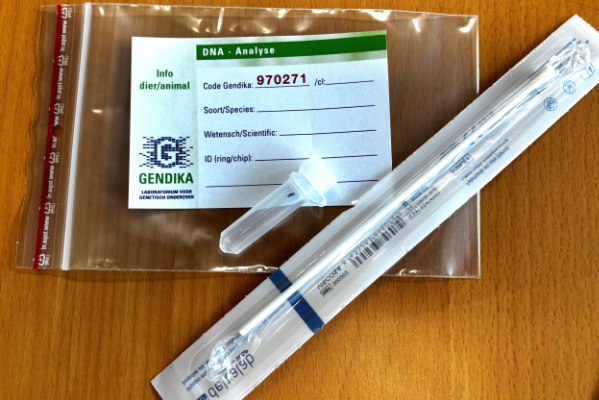
Required Sample Material
To detect the PBFD virus, Polyoma virus, and Pacheco virus, the Gendika laboratory only needs a drop of blood from the bird. Sampling is usually performed by a veterinarian, but you can also provide the samples yourself. We will be happy to send you the necessary blood tubes free of charge. You can also submit a tissue sample for postmortem detection of the diseases.
To detect Chlamydia, a swab is taken from the bird’s mucous membranes. This sample is preferably collected by a veterinarian, but you are also permitted to collect it yourself.
Please send us a signed order form along with the blood and/or swab samples. You can download the forms from our webshop or request them from Gendika (0598-619343 or info@gendika.com).
PBFD Virus (Beak and Feather Rot)
PBFD is caused by a Circovirus and occurs primarily in parrots, which are particularly susceptible to this disease. Unfortunately, there is no cure yet. Symptoms of PBFD include weight loss, beak deformity, abnormal feathers, and ultimately the death of the bird. The virus is transmitted through direct contact with infected feces, materials (such as cages), and feather dust.
Polyoma Virus
Adult birds can carry the Polyoma virus without being visibly ill. The virus can only manifest itself during stress, leading to symptoms. Birds that carry the virus but show no symptoms pose a risk to other birds, especially young birds. Young birds (15 to 60 days old) are particularly susceptible, and infection can be fatal. Symptoms can include loss of appetite and skin bleeding. In some cases, a bird dies without any obvious symptoms of the virus.
Pachecovirus
Pacheco’s disease is caused by a herpesvirus and can be latent in birds without symptoms. However, stress can reactivate the virus, often leading to fatal symptoms. Early signs include deformed feathers and yellow droppings. Healthy carriers of the virus are dangerous to other birds.
Chlamydia (Psittacivirus)
Chlamydia psittaci is the bacterium that causes psittacosis. After infection, birds often show symptoms such as decreased appetite, dehydration, diarrhea, and inflammation of the mucous membranes of the eyes and nose. If diagnosed early, the disease can be effectively treated with antibiotics. Psittacivirus can also pose a health risk to humans, which is why a positive test result is always reported to the Netherlands Food and Consumer Product Safety Authority.
Pathogen Analysis Results
Once the blood and/or swab samples arrive at the Gendika laboratory, they will be processed within 24 hours. The analysis results are usually available within 1 to 3 business days.
After the analysis is complete, you will receive the results by email. If you would like to receive the analysis report, invoice, and certificates in hard copy, we will send them to your address. Alternatively, you can receive only the analysis report and invoice by email.
If the analysis detects a pathogen in your bird’s blood or swab, we advise you to contact your veterinarian. They can provide further information about the appropriate measures.